

Chronic Stress Quietly Raises Your Stroke Risk
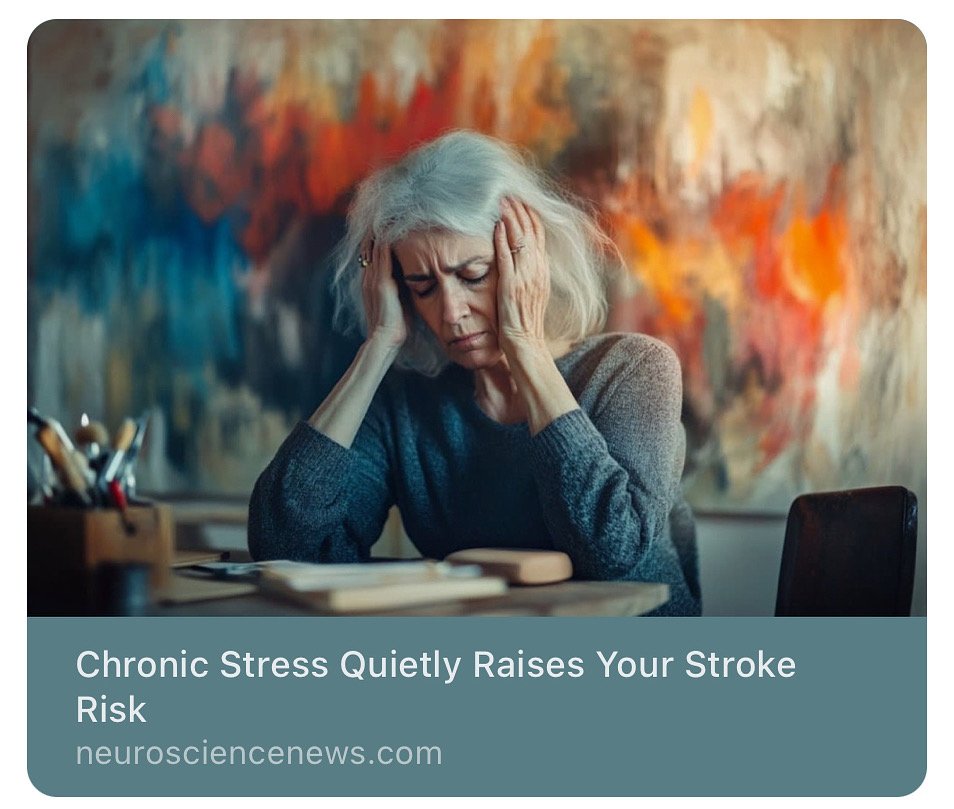
A recent study in Neuroscience News validates yet again what we already knew: chronic stress is not good for you.
In particular, this research reveals how long-term stress increases your risk of suffering a stroke.
One of the ways that chronic stress impacts your chances of having a stroke is by intensifying factors such as elevated blood pressure, inflammation, poor sleep and unhealthy lifestyle choices.
We know what happens when someone is having a stress reaction and experiencing a moment of fight-or-flight. Some common effects include:
– increased blood pressure
– elevated blood sugar levels
– a tendency towards inflammation
– greater levels of blood clot formation
As the researchers explain, all these factors are linked to a higher risk of both ischemic (restricted blood flow) and haemorrhagic strokes. This risk is exacerbated when someone is constantly in a state of stress reactivity. Rather than it being an acute moment of danger, the fast-paced, relentless nature of modern life means stress is increasingly being experienced as a cycle of chronic stress reactivity.
This is where the preventative impact of techniques like meditation are critical to reducing stress.
In Vedic Meditation we see:
– normalised blood pressure
– reduced levels of stress chemicals such as adrenaline and cortisol
– lower levels of acidity and inflammation
– increased blood flow to the brain
Given stroke is one of the leading causes of death and disability in the western world, the power of Vedic Meditation to reduce these known risk factors has obvious and significant potential for prevention.