

This reduces stress, optimises mental and physical functioning and leads to feeling clearer and happier.
In this article we’ll look at how Vedic Meditation works in the context of other styles of meditation and investigate what sets Vedic Meditation apart in terms of ease of practice and tangible benefits to mind and body.

Introduction
For some, meditation means listening to someone guide them through an experience via an app on their phone. It could be that sitting or moving in nature is a form of meditation. For someone else it means trying to concentrate their mind on a specific image or focus on their breathing. Meditation can be a form of prayer or devotion, while for others it may be a process of observing their thoughts in an attempt to be more present.
Whatever the style, more people are realising that the ability to sit still and be at peace, is becoming increasingly urgent. There’s a huge need to counter-balance the demands of life in a way that is effective and doesn’t have negative side-effects.
This recognition of the impact of meditation is reflected in exponential growth in the numbers of people who report having some sort of meditation. The pandemic and the advent of meditation apps have been significant factors here.
Whilst no single survey covers the number meditating globally, estimates suggest on the order of a few hundred million people practice meditation worldwide. One report notes: “A rough estimation of people who meditate globally ranges between 200 and 500 million people.” This range corresponds to roughly 2-6% of the world’s population having engaged in meditation. These estimates encompass all forms of meditation practice across different cultures.
What are the 3 main styles of meditation?
Broadly there are three main styles of meditation:
1. Focused Attention or Concentration
This approach involves fixing your attention on something with the aim of not thinking anything else. It might be concentrating on a candle, staring at an image or simply focusing on your breath. The goal is to create and maintain a state of silence. This approach takes effort and discipline to sustain a regular practice.
2. Open Monitoring
This approach is also known as mindfulness. Open Monitoring meditation directs the meditator’s awareness to feelings, thoughts or breathing, with a mood of non-judgment and detachment. The practitioner looks to maintain a sense of calm despite a thought- filled mind. The goal is to become more grounded by developing awareness of the present moment, rather than overreacting to the situation.
3. Automatic Self-Transcending
This style involves the use of a sound called a mantra to orient the mind towards quieter levels of thinking. The mantra is like a vehicle that the mind hops onto, and automatically the mind moves with the mantra to experience finer layers of thinking. A point comes when the mantra disappears, and the mind falls into a state of pure inner contentedness. The mind is awake, however there are no thoughts occurring. Vedic Meditation is an example of an automatic Self-Transcending technique.
Different meditation styles have different effects.
When examining different techniques, there are three important aspects to examine:
1. What's the effect on brain functioning?
The brain is the most important organ in the human body, governing and coordinating our thoughts and actions at the centre of the nervous system. Therefore, it makes sense to know what impact a particular practice is having on the brain. Through the use of neural imaging and EEG we can see different parts of the brain are activated and developed with the different styles of meditation.
2. How deeply are you resting?
This is one of the most impactful potential benefits of meditation. However not all meditation techniques deliver the same depth of rest. We all know how much better we feel and perform when we rest deeply, so having a regular way of achieving this is key.
3. Is the practice easy, enjoyable, and practical?
This is perhaps the most significant point. Meditation only works when you do it. Is it easy? Do you look forward to meditating? Or does it feel like hard work? Can you fit this into your life on a regular basis?
In this article we're focusing on Vedic Meditation - an Automatic Self-Transcending Meditation that delivers on all of these factors:
- ✓ brain functioning is optimised
- ✓ it delivers a profound level of rest, deeper than sleep
- ✓ it's easy, enjoyable and fits with a busy life
What is Vedic Meditation?
You silently think to yourself a simple sound called a mantra. As you think the mantra it draws the mind to a more settled state. As thinking becomes quieter, the body begins to rest very deeply. After about 20 minutes you slowly come out of the meditation feeling mentally clear, emotionally balanced and physically rested.
We typically practise Vedic Meditation for 20 minutes twice each day – before breakfast and before dinner. The whole process is easy and straightforward.

Where does Vedic Meditation come from?
Vedic Meditation comes from the Vedic tradition of ancient India-a system of knowledge that is thousands of years old and still alive today. This tradition is rooted in the Veda, a Sanskrit word meaning pure knowledge. The Veda is the oldest continuous tradition of knowledge in human history, predating Western philosophy and scientific inquiry by millennia.
The Vedic tradition emerged in the region that is now modern-day India and Pakistan, following the decline of the Indus Valley Civilization. As society evolved, a sophisticated culture developed around areas such as health, architecture, music, governance, and spiritual development. Meditation and yoga were part of the tools used to cultivate inner wellbeing and higher consciousness.
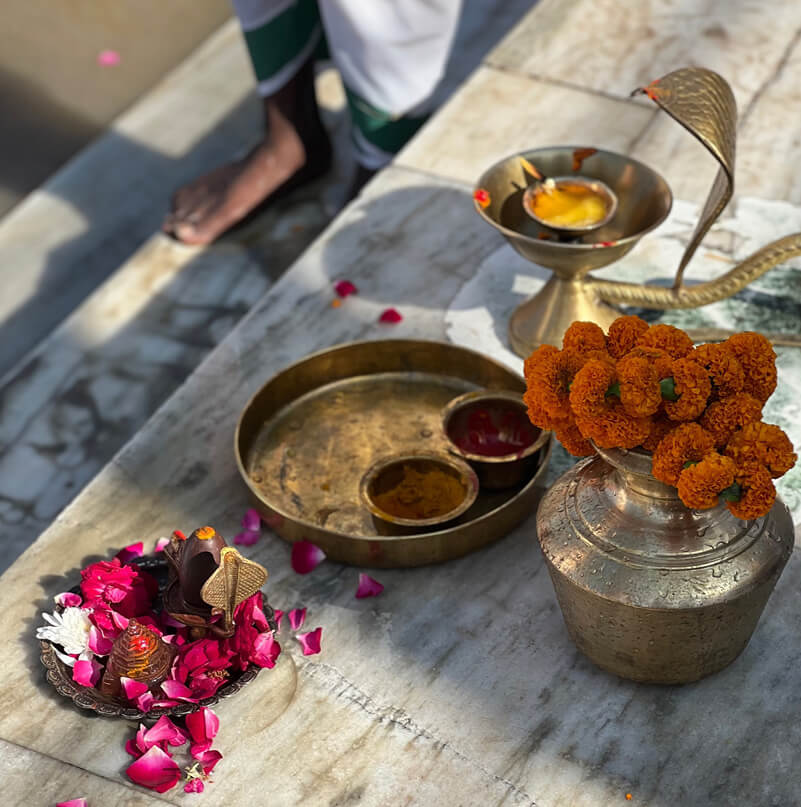
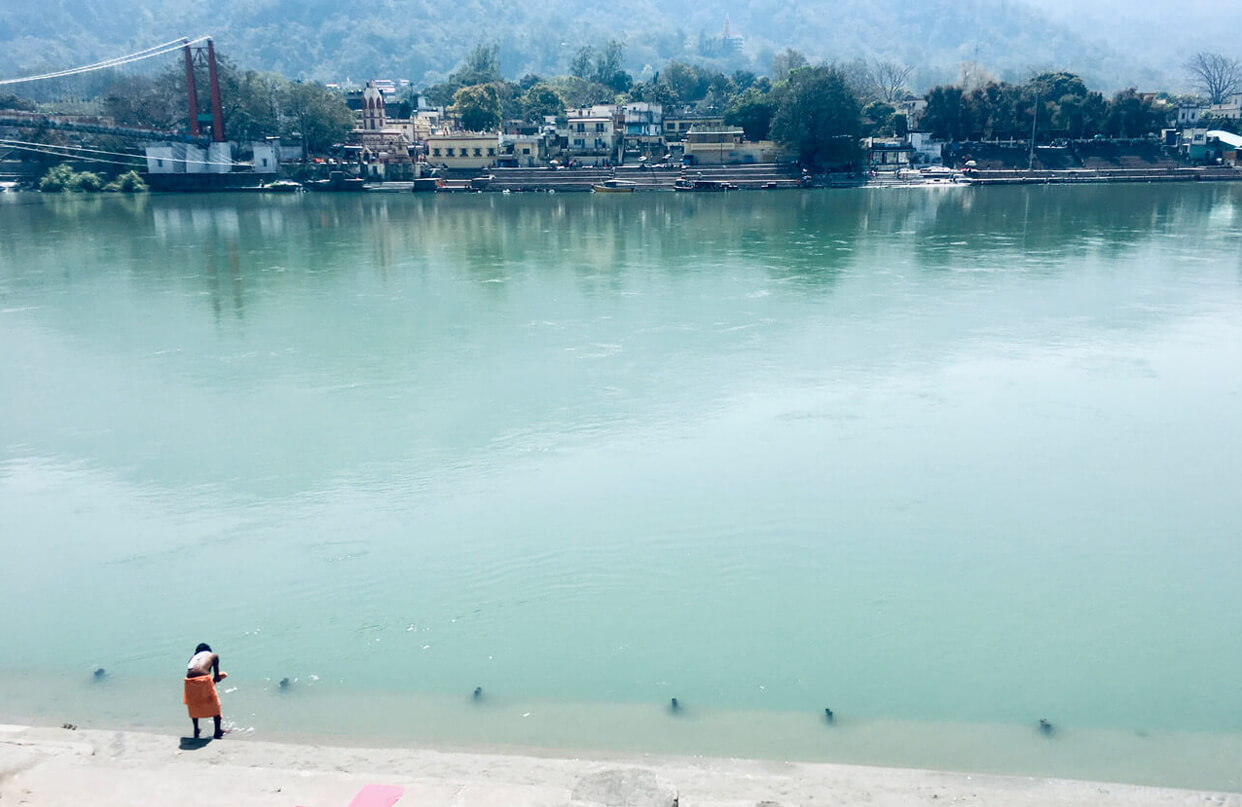
Although the Veda was eventually written down in texts known as The Vedas, its essence was preserved through an oral tradition, passed directly from teacher to student for generations. In contrast to Western science-which relies on external observation and experimentation- the Vedic approach was based on direct cognition. Enlightened men and women explored the deepest layers of consciousness using their own mind and body as the instrument. Their primary tools were techniques of awareness, with meditation being the most refined and effective.
Vedic Meditation, as taught today, is a modern application of these ancient practices. It uses a specific sound or mantra to settle the mind effortlessly into quieter states, allowing the body to rest deeply and the nervous system to release accumulated stress.
While adapted for contemporary life, its roots are firmly grounded in the Vedic tradition – a body of wisdom as relevant now as it was thousands of years ago.
What are common misunderstandings about meditation?
- X Meditation is hard work and requires lots of focus and concentration.
- X Meditation involves trying not to think.
- X It takes a long time to get good at meditation.
- X Meditation means sitting cross legged.
- X Meditation is a religion or belief system.
The biggest misunderstanding about meditation is that it’s hard work and requires lots of effort to still your restless, noisy mind.
A quick exercise
Close your eyes and notice your breathing. Now take a few seconds and stop thinking. For about 60 seconds, stop all thoughts in your mind. Don’t think for one minute.
How did it go?
Predictably, you had thoughts. The mind, by its nature, will always find something to think about. Your mind cannot be active without content. And the moment you try to prohibit those thoughts, they ramp up.
‘Don’t think’ is a thought. Then ‘Oh no, I mustn’t think’ is another thought. Very quickly you find yourself caught in a frustrating loop. By continually trying to push thoughts away, you end up having more of them – the opposite of the intent.
- Fighting against thoughts is futile.
- The more you try, the noisier the mind.
- The less you try, the quieter the mind.
If you can think, you can meditate.
How does Vedic Meditation work?
In Vedic Meditation, instead of trying to control the mind, we use a simple sound or vibration to lead the mind inwards to quieter layers. This sound is called a mantra. Mantra is a Sanskrit term derived from two root words – manas for mind and tra for vehicle or instrument. A mantra is a ‘mind vehicle’, that triggers the effect of leading the mind into more subtle thinking. The mantra has no intended meaning, it works at the level of vibration.
When we think the mantra silently inside it automatically draws the mind inwards, away from the noisy surface layers of thinking towards subtler strata until we arrive at the source of all thinking – a state of Being. A state of consciousness without thought.
How are mantras used in Vedic Meditation?
In Vedic Meditation, we use a particular type of mantra designed to settle the mind. The mantra, chosen for the individual meditator by their teacher, is a particular pulsation of sound that’s resonant with the thinker. Not everyone has the same mantra – certain sounds work best for certain groups of people.
The primary quality of the mantra is the tendency to become quieter. This self-refining capability is built into the structure of the sound itself. When thought silently in the mind, it spontaneously becomes fainter.
In addition to this, the mantra has another very important quality that’s key to the process. As it becomes more subtle and soft, the mantra becomes increasingly charming and soothing to the mind. The mind is attracted these quieter layers, so as the mantra softens, the mind follows. The phenomenology of experiencing the mantra causes it to become more charming.
So the meditator closes their eyes and silently begins to think the sound. Quickly and spontaneously, the mantra begins to self-refine and quieten down. As it’s gently repeated the sound becomes more soft and subtle until a point where it’s almost imperceptible. And then the mantra disappears, and for a moment thinking falls quiet. The mind drops into an inner, serene state – conscious and awake, yet without thinking. These moments may be brief and the practitioner is not even aware it’s happening.
How does the mantra work?
Because of the personal nature of the sound, the mantra is attractive to your mind. As it becomes softer it becomes increasingly charming, until a point is reached where the mantra is absolutely fascinating to the mind and yet so faint, it’s almost imperceptible. Very quickly the mind the mind has been drawn into a super-subtle state. This happens automatically – there’s no effort required. The mantra is doing the work. Then the mantra disappears, and the mind is left with no mantra and no thought replacing it. In that moment we have stepped beyond the thinking level of the mind and dropped into a state of pure, inner, serene contentedness, a state of bliss.
In Vedic Meditation we are working with the mind rather than fighting against it. In this way the mantra is an orienting device, not a concentration device. It naturally leads the mind in the direction of a restful and refined state, instead of trying to hold the mind in an active and focused mode.

What are the main benefits of Vedic Meditation?
There are many reasons why people come to meditation. The benefits are wide-ranging and cumulative. And the upgrades don’t come in isolation – positive change in one area will initiate change in many others. Here are some of the most important and impactful questions that people ask when considering learning to meditate:
Stress isn’t just a feeling-it’s a buildup of distortions in the entire nervous system. Rather than simply managing the damaging effects of stress, Vedic Meditation allows the deep-rooted imbalances to be cleared from the system. With each sitting of meditation, the body experiences a state of deep rest that quickly dissolves stress and restores balance to the nervous system. You come out clearer, calmer, and more resilient.
- Activates the parasympathetic nervous system to dissolve stress at the root cause
- Reduces stress chemistry by lowering cortisol and adrenaline
- Reduces inflammation and enhances recovery
- Builds a foundation of inner calm
As stress dissolves and anxiety reduces, we experience a steadier, more resilient version of ourselves-clearer, calmer, and more present.
After only one week of practising Vedic Meditation, a student, Jack, described it like this:
“I feel calmer and more measured. I have not been experiencing the extremes of emotion so much. Pre-meditation I could get worked up about something at work, but I feel better able to take things in my stride now.”
Anxiety is often a signal that the system is overloaded. Vedic Meditation works by allowing the body to release deep-rooted stress, resetting the nervous system and creating space between you and your thoughts.
- Shifts you out of fight-or-flight
- Quiets the overactive mind
- Builds inner stability and resilience
- Replaces agitation with grounded calm
When your baseline is calm, anxiety doesn’t grip as tightly. With regular practice, you feel clearer, steadier-and more like yourself again.
This move away from stress reactivity is summed up beautifully by Alice:
“Before meditation I was very aware that I was living in a survival state-hypervigilance, anxiety, a constant feeling of overwhelm. After just a few days, something felt different in my body, that constant feeling of needing to be ready, lessened.”
When the nervous system is chronically stressed, one of the first things to suffer is sleep. Many people feel “tired but wired”-exhausted, yet unable to switch off. Vedic Meditation shifts the body out of the overdrive that leads to insomnia by releasing tension and restoring a natural rhythm of rest.
- Reduces night-time mental hyperactivity and rebalances the nervous system for deeper sleep
- Delivers rest deeper than sleep to clear chronic fatigue stored in the body
- Unlocks natural, sustainable energy
You wake up feeling clearer, calmer-and more equipped to meet the day.
Here’s how one meditator Kerstin, described the impact of Vedic Meditation on her sleep:
“I struggled with getting up in the mornings since I was a teenager. Now I can get up easily and I don’t dread the day ahead. I also used to stress a lot about not getting enough hours of (good quality) sleep. I don’t have that thought anymore.”
When the mind is cluttered and reactive, good decisions are hard to come by. Vedic Meditation clears the noise. By deeply resting the nervous system, the practice sharpens mental clarity and improves access to our inner knowing.
- Reduces overwhelm and mental fog allowing for increased focus and precision
- Optimises brain coherence leading to enhanced creative problem-solving
- Restores calm, intuitive thinking which reduces stress-driven reactivity
The more rested you are, the more clearly you can perceive and the wiser your choices become.
Mandy speaks about how this uplift in clarity is helping deal with challenging situations:
“I’m able to focus more on what I need to do and to complete it with a bit more ease. I can think more clearly and decide how I need to respond to stressful situations and tricky people, with quicker recovery times and less going over the situation again in my mind.”
Health isn’t just about what we eat or how we exercise. It’s about how well the body can recover and rebalance. Vedic Meditation activates the body’s innate healing capacity by calming the nervous system, so the body move moves back to a more balanced state.
- Reduces stress-related conditions like high blood pressure, digestive disorders and chronic fatigue
- Lowers inflammation and improves immune response
- Supports hormonal balance and cardiovascular health
By giving the body deep rest, we move out of survival mode and into repair. Over time, systems recalibrate-and we experience health not as effort, but as a natural state.
Stress accelerates aging and meditation does the opposite – it’s that simple. Vedic Meditation reduces the internal pressure that speeds up biological decline. By deeply resting the body and calming the nervous system, meditation supports the systems that keep us young and vital.
- Reduces oxidative stress and inflammation
- Supports cellular repair and hormonal balance
- Optimises brain health to keep the mind sharp and enhance emotional resilience
Aging well isn’t about resisting time-it’s about reducing the internal wear that ages us prematurely. With meditation, we support the body’s natural ability to stay vibrant, longer.
How is Vedic Meditation taught?
This is why it’s essential to stay with the time-tested method of learning in person. In an age where so many of our experiences are transmitted through screens, learning Vedic Meditation is different. It might feel a bit old school, but gaining such a fundamental life skill is a subtle and delicate process.device. It naturally leads the mind in the direction of a restful and refined state, instead of trying to hold the mind in an active and focused mode.

Why can't I learn to meditate from a book?
You can’t learn Vedic Meditation from a book or an app for the same reason you don’t see people becoming expert piano players by reading descriptions, (or watching videos). You may be able to glean some pointers, you may pick up some of the language but you’re not going to become skilled and confident in your practice. That requires personal guidance from someone who knows how to teach correctly.
- Learning to meditate requires personal instruction. Although Vedic Meditation itself is effortless, learning is a delicate process, and it’s not possible to communicate this adequately by written descriptions. The teacher needs to meet directly with the student in order to give nuanced guidance.
- Learning to meditate is experience-based. Everyone’s experiences are unique, they learn at their own pace and the teacher needs to support this, so everyone learns properly.
- It takes guidance for the new meditator to be able to recognise and understand the experience of more subtle states of consciousness they’re having. An experienced teacher is very important to direct and reassure so the meditator doesn’t inadvertently undermine their progress.
- From the moment of initial instruction, experiences change and develop. It’s crucial for the beginner student to be able to check in with a teacher who knows what they’re doing.
What is the structure of a course in Vedic Meditation?
Learning Vedic Meditation properly involves joining an in-person course, over four consecutive days. Each session is about 2 hours. Once you’ve completed the course you know how to meditate properly and are self-sufficient in a daily practice. You have a powerful tool to use for the rest of your life.
Here’s what Lauren had to say about the learning process:
“I loved the in-person format and small group size! I also loved that it was over a 4-day period. I felt like I left with a solid foundation to continue the habit of meditating twice a day.”
Here’s the structure of the course:
Day 1 – Instruction in your mantra and the basics of how to meditate. You’re practising within a few minutes.
Day 2 – Discussion of your experiences and guidance about fitting meditation into day-to-day life.
Day 3 – A deep understanding of how meditation releases stress and how this relates to experiences during meditation.
Day 4 – The road ahead. Meditation fundamentally upgrades your life, and we discuss what this expansion of awareness looks like.
This course structure works because it gives you complete knowledge – both experiential and theoretical understanding. This compressed format means that by the end of the course the student has the course the student has the confidence and self-sufficiency to meditate daily, setting them up for a lifelong practice.
How do I find out more about Vedic Meditation?
- Book – Why Meditate? Because it Works, by Jillian Lavender
- Podcast – Speaking of Meditation, by Michael Miller
- Book – Do Reset: Meditate. Move beyond thinking. Find clarity, by Jillian Lavender
- Websites-londonmeditationcentre.com and newyorkmeditationcenter.com
- Podcast Interviews – BBC: Don’t Tell Me the Score, Liz Earle, Good Food Podcast
- Talks – Do Lectures, How To Academy, MAD Conference in Copenhagen
- Articles – Vogue, The Times, The Guardian